As an Amazon Associate, we earn from qualifying purchases. Some links on this site are affiliate links at no extra cost to you. Our recommendations are based on thorough research and editorial judgment.

How Do I Prepare For A Multi-Day Cycling Event?

To prep for a multi-day cycling event, focus on building endurance with low-intensity rides and gradually increase your distance. Don’t forget to fuel up—aim for 60 grams of carbs each hour and hydrate wisely with electrolytes. Recovery is key, so prioritize sleep and active recovery. And let’s not overlook mental prep; visualize your success and set small goals to keep motivated. Stick around, and discover more tips to crush that cycling challenge!
Key Takeaways
- Build endurance through low-intensity Zone 2 rides, gradually increasing volume to adapt your body for longer distances.
- Prioritize nutrition by consuming 60 grams of carbohydrates per hour during rides and hydrating with electrolytes.
- Schedule tougher training rides first to simulate race conditions and allow for recovery afterward.
- Emphasize recovery techniques like quality sleep, active recovery, and proper nutrition to prevent injuries.
- Cultivate mental resilience through goal setting, mindfulness, and visualization to navigate the challenges of multi-day events.
Building Endurance Through Aerobic Rides
You may be interested



Building endurance through aerobic rides is a journey, one that requires patience, perseverance, and a touch of joy in the process. Athletes, especially cyclists, often find that the right intensity distribution is key. Imagine cruising along on a sunny day, heart rate steady, as low-intensity rides in Zone 2 work wonders for aerobic adaptations. These rides boost mitochondrial biogenesis and capillary density, allowing cyclists to tap into fat stores and save glycogen for those tough climbs. Meanwhile, high-intensity intervals (Zone 5) are like sprinkles on a cupcake—necessary but in moderation. Embracing this balance, with most rides low intensity, can transform endurance over just a few weeks, making every pedal stroke a step toward greater fitness and joy on the road ahead.
Gradual Volume and Load Adaptation
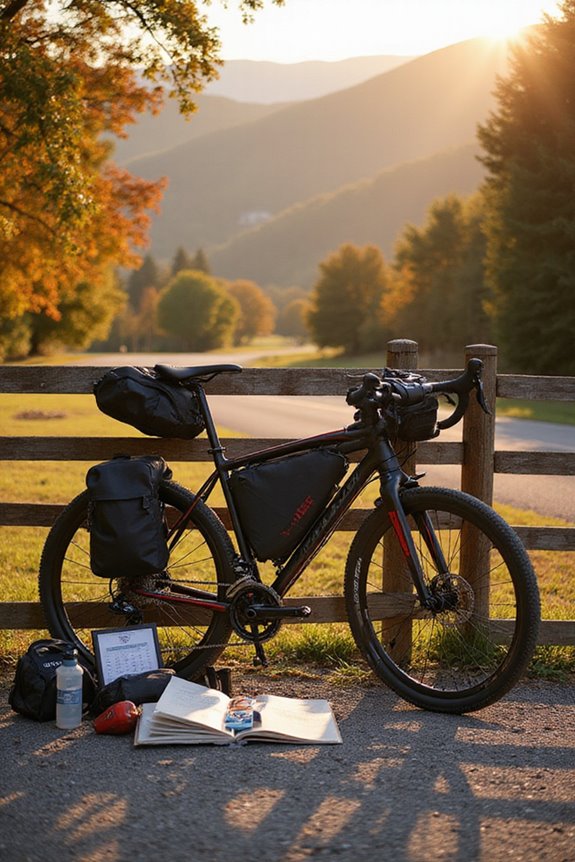
While training for a multi-day cycling event, it’s essential to think about how the body gradually adapts to increased volume and load, almost like a plant growing stronger with the right amount of sunlight and water. Load progression is key; starting with manageable distances and gradually increasing over weeks helps the body build resilience. Athletes often benefit from adaptation strategies like block training, which simulates race conditions through back-to-back rides. This teaches the body to recover while pushing its limits, making those long days feel less intimidating. Scheduling tougher rides first guarantees that recovery can follow, allowing for peak performance later. By respecting this gradual adaptation process, cyclists can confidently tackle the challenges ahead, feeling prepared and energized!
Effective Nutrition and Hydration Strategies
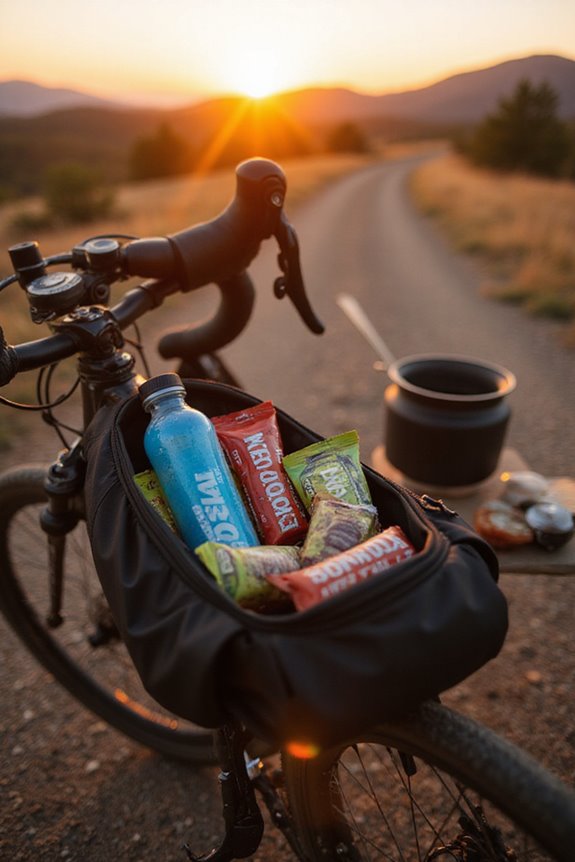
How can cyclists guarantee they’re fueling their bodies effectively during a grueling multi-day event? The key lies in carefully planned nutrition and hydration strategies. Cyclists should aim for approximately 60 grams of carbohydrates per hour from diverse carbohydrate sources like gels, bars, and sports drinks, especially during rides over two hours. Hydration timing is important too; sipping fluids containing electrolytes frequently keeps energy levels high and prevents dehydration. Mixing water and electrolyte drinks helps maintain balance. Post-ride, it’s necessary to consume 60-70 grams of carbs within an hour to replenish glycogen. Remember, experimenting during training is significant—event days aren’t for surprises! With the right approach, cyclists can perform at their best and enjoy the ride.
Prioritizing Recovery and Injury Prevention
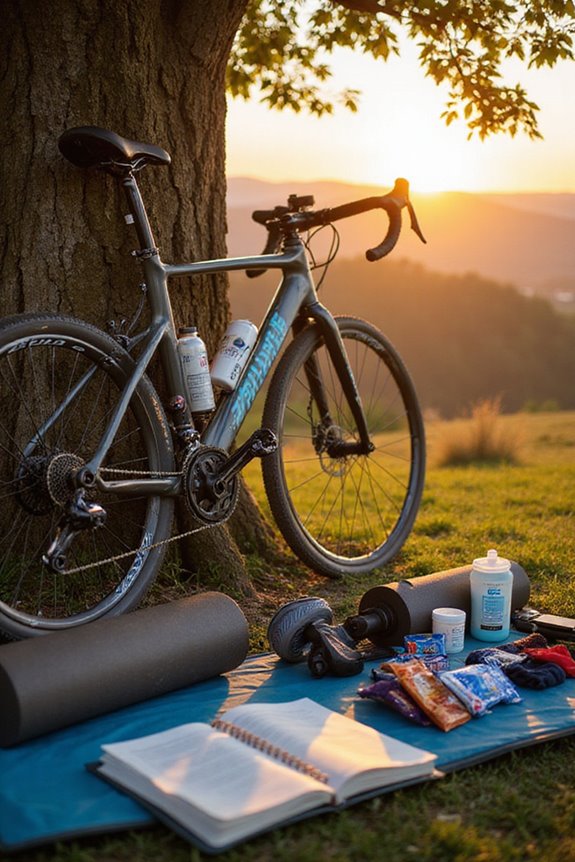
Recovery and injury prevention are the unsung heroes of any multi-day cycling event, often overshadowed by the thrill of the ride. Prioritizing sleep hygiene, with at least eight hours of quality rest, is vital for muscle repair and energy replenishment. Post-ride, engaging in active recovery like gentle yoga or slow cycling helps flush out fatigue. Stretching protocols focusing on tight areas, combined with regular hydration strategies, keep muscles limber and energized. Injury monitoring is important; keeping an eye on swelling or unusual soreness can prevent overuse issues. Don’t forget recovery nutrition—snacking on protein and low-glycemic carbs within 30 minutes post-ride is key. Balancing these elements guarantees a smooth ride on subsequent days, keeping spirits high and legs strong.
Equipment and Logistics Preparation
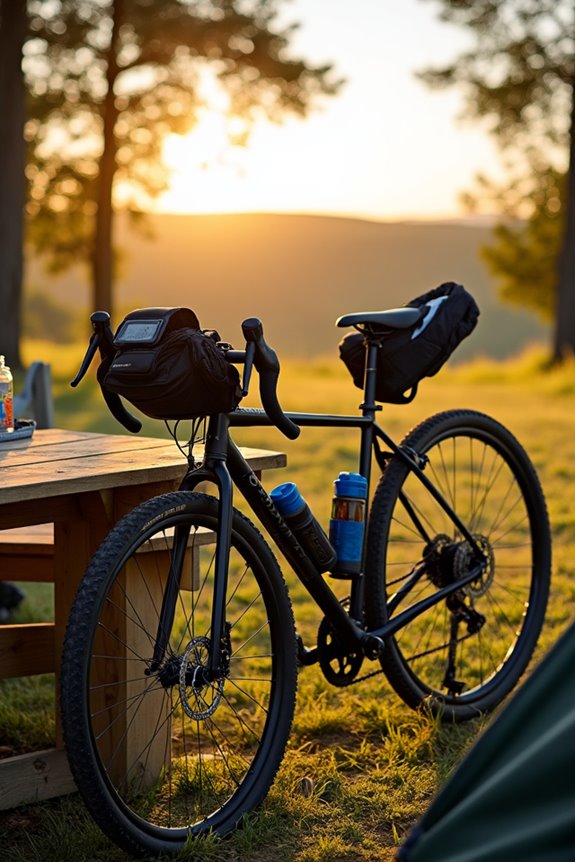
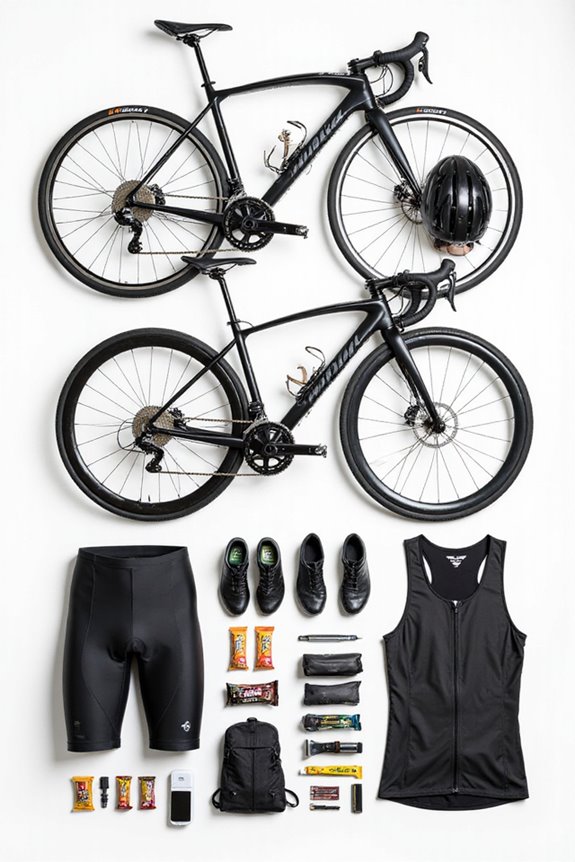
Preparing for a multi-day cycling event is like packing for an adventure where every ounce counts and comfort is king. Gear selection plays an essential role; cyclists need a helmet that meets safety standards, breathable jerseys, and durable bib shorts. Packing tips include carrying spare inner tubes and a portable pump to tackle unexpected flat tires. Additionally, a hydration system and nutritious snacks keep energy levels high. Layered clothing is vital for fluctuating weather, while bike accessories like panniers and secure locks enhance convenience and safety. Don’t forget a power bank to keep devices charged, and pack emergency cash in a waterproof pouch. With careful logistics, the ride becomes less about worry and more about the exhilarating journey ahead.
Mental Preparation and Strategy
As the days draw closer to the multi-day cycling event, riders often find themselves wrestling with a whirlwind of emotions, from adrenaline-fueled excitement to nagging doubts about their endurance. To navigate this rollercoaster, emotional regulation becomes key. Riders can cultivate mental resilience through goal setting, breaking the race into manageable stages, and focusing on the present moment using mindfulness techniques. Visualization strategies, like picturing each stage unfolding smoothly, prepare them for surprises. Cognitive reframing helps shift negative thoughts into challenges, while self-compassion practices guarantee they’re kind to themselves during tough times. By employing these stress management tools, cyclists can transform anxiety into motivation, making each ride not just a race but a journey of personal growth and triumph.
Incorporating Strength Training
Strength training isn’t just for bodybuilders; it’s a game-changer for cyclists gearing up for multi-day events. By incorporating strength training techniques like squats and deadlifts, cyclists can enhance their muscle strength, boosting power and speed on the road. Imagine finishing that grueling uphill climb, feeling like a superhero! Additionally, strength training benefits include reduced injury risks, making those long rides more enjoyable. Engaging core muscles with planks or building back strength through rows can transform a cyclist’s endurance. With a balanced training schedule that includes rest and recovery, cyclists can maximize their performance while keeping fatigue at bay. Ultimately, strength training isn’t just about lifting weights; it’s about building a resilient body ready for every challenge the road throws ahead.
Simulating Event Conditions in Training
When cyclists step onto the saddle for a multi-day event, they quickly realize that the real challenge isn’t just about pedaling harder; it’s about preparing for the unpredictability of race day. To tackle this, incorporating varied terrain variations into training is essential. Cyclists should mix hills with flat stretches, simulating the diverse conditions they’ll face. Race simulations are crucial too; structured rides sharpen strategy, while unstructured ones build endurance. Group rides enhance drafting skills, mimicking race dynamics and social interactions. Think of those long “soul rides” as mini-adventures, forging mental toughness. By blending these elements, cyclists can create a training experience that’s as close to race day as possible, ensuring they’re ready for anything that comes their way.
Frequently Asked Questions
What Type of Bike Is Best for Multi-Day Events?
Determining the best bike for multi-day events often leads riders to contemplate mountain bikes for rugged terrains and touring bikes for comfort and gear capacity, each offering unique advantages tailored to specific riding conditions and preferences.
How Do I Choose the Right Cycling Clothing?
Choosing cycling clothing requires balancing breathable fabrics with weather considerations; moisture-wicking materials contrast with cotton’s discomfort. Layering options enhance adaptability, while fit and practical features guarantee comfort and performance throughout long rides in varying conditions.
What First Aid Supplies Should I Carry?
When considering first aid supplies, individuals should prioritize first aid essentials like waterproof plasters, absorbent dressings, and gloves. Emergency preparedness includes regularly updating kits and acquiring basic first aid training to effectively manage injuries.
How Can I Prevent Saddle Sores During Long Rides?
Many cyclists underestimate saddle sore prevention. To combat discomfort during long rides, using chamois cream is essential, along with choosing the right saddle and maintaining proper hygiene to guarantee a comfortable and enjoyable cycling experience.
Should I Ride Alone or With a Group?
The decision between solo riding and group dynamics hinges on personal preferences. Solo riding offers pace control and self-reliance, while group dynamics enhance motivation and support, each presenting unique advantages and challenges in cycling experiences.