As an Amazon Associate, we earn from qualifying purchases. Some links on this site are affiliate links at no extra cost to you. Our recommendations are based on thorough research and editorial judgment.

How to Store Camping Gear Properly

Store camping gear only after it is clean, dry, and free of food or fuel residue. Choose a space that protects fabric, foam, coatings, batteries, zippers, and metal parts from moisture, heat, pests, sunlight, and crushing. Keep an inventory, store hazardous materials separately according to local rules, and inspect safety-critical equipment before the next trip.
Key Takeaways
- Clean and dry each item according to its material and manufacturer’s care instructions.
- Store tents, sleeping bags, pads, and technical fabrics without trapped moisture or unnecessary compression.
- Keep fuel, batteries, food, chemicals, and sharp tools separate and secured appropriately.
- Use labels and an inventory system so missing, damaged, or expired items are easy to identify.
- Inspect gear before use and repair or replace anything that affects shelter, cooking, navigation, or safety.
Designating a Storage Space
You may be interested

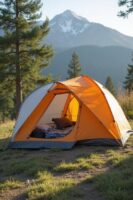

Choose a dry, ventilated space away from leaks, heaters, direct sunlight, pests, chemicals, and household clutter. Keep heavy boxes from crushing delicate gear and leave enough access to inspect or remove items safely. A garage or shed may work only when temperature, moisture, security, and local fuel-storage rules are suitable. Never store fuel, gas canisters, or wet gear casually indoors.
Utilizing Vertical and Overhead Storage
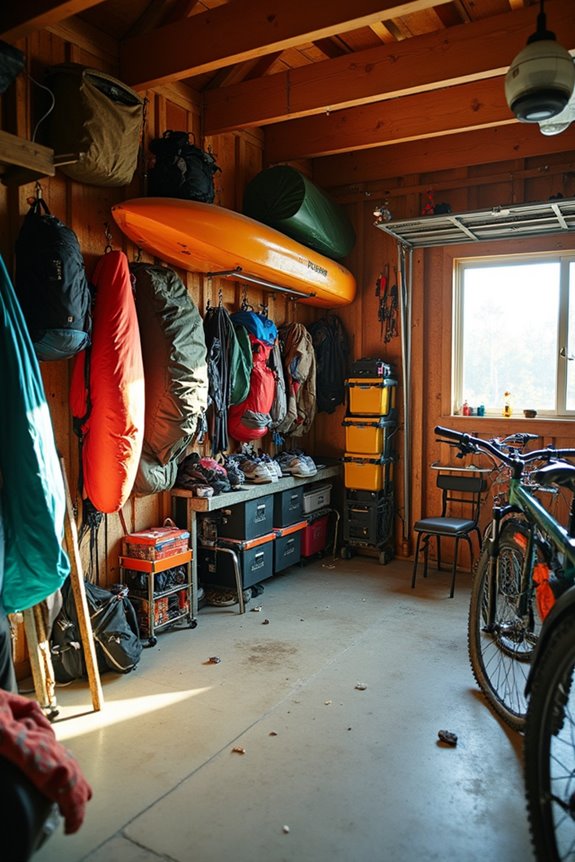
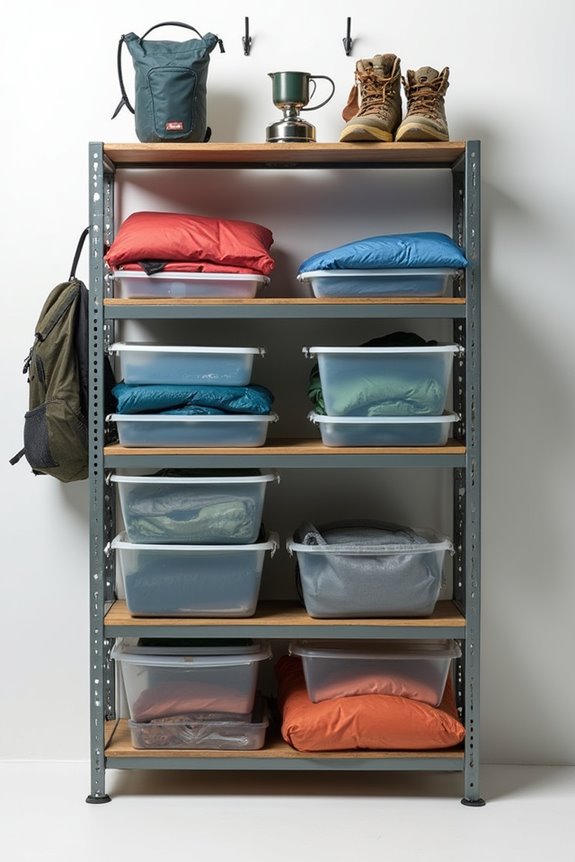
Vertical storage can free floor space, but anchor racks to a suitable structure and respect the load rating. Place heavy items low, keep frequently used gear reachable, and avoid hanging objects where they can fall on people or block exits. Store soft gear without sharp pressure points, and use labeled bins only when they do not trap moisture.
Recommended Products

900 lbs Tested, 450 lbs Rated Weight Capacity: Our overhead garage storage rack undergoes rigorous double load testing (900 lbs) to ensure unmatched safety and durability, supporting up to 450 lbs for your tools and equipment.

Maximize Garage Space Efficiently: Use this ceiling storage for garage to free up valuable floor space. Ideal for bins, luggage, and bulky items with over 30 cubic feet of storage capacity
Proper Storage Techniques for Tents
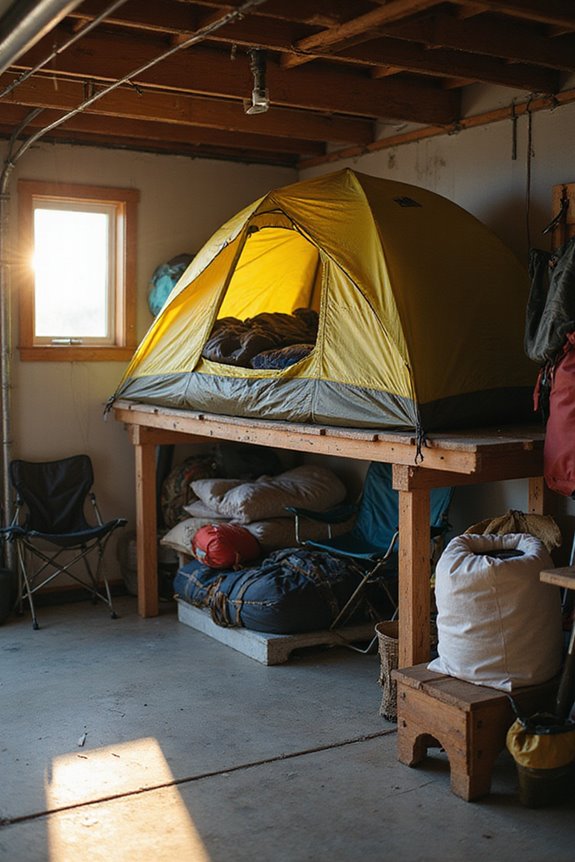
After transforming a cluttered garage into an organized haven by utilizing vertical space, the next step is ensuring that camping gear, especially tents, is stored properly. First, tent cleaning is essential; a clean tent prevents dirt from wreaking havoc over time. Once cleaned, store it loosely in mesh bags or pillowcases, allowing the fabric to breathe and avoiding tight packing. A cool, dry spot is ideal—definitely steer clear of damp basements! For tent pole organization, keeping poles partially assembled is a smart move, reducing tension on the shockcords. Using a protective case or hanging them up can keep those poles safe. Additionally, ensuring your tent has a high waterproof rating will help maintain its integrity during storage and future use. With these techniques, your tent will be ready for the next adventure, free from mold and mishaps!
Recommended Products

Pack your tent in our ALPS Mountaineering Tent Bag and you're ready for you next campout

Size: 2pcs black bags(36 * 24 inches)This heavy-duty mesh laundry bag is designed to provide you with a one-week laundry service.
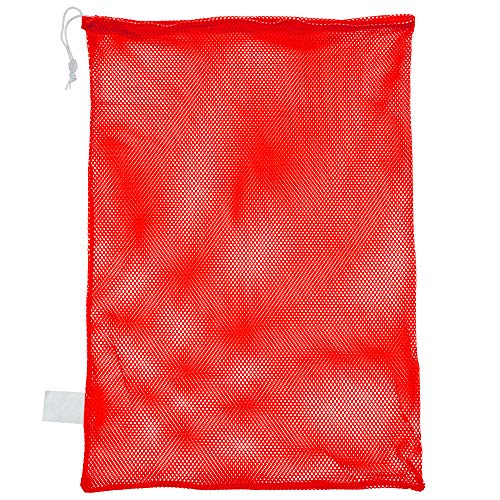
PREMIUM MESH BAG: Store and organize all your fitness equipment with these nylon mesh bags by Champion Sports! Our sports equipment bags are made with heavy-duty, durable nylon, and are available in multiple vibrant colors.
Organizing Cooking Gear and Stoves
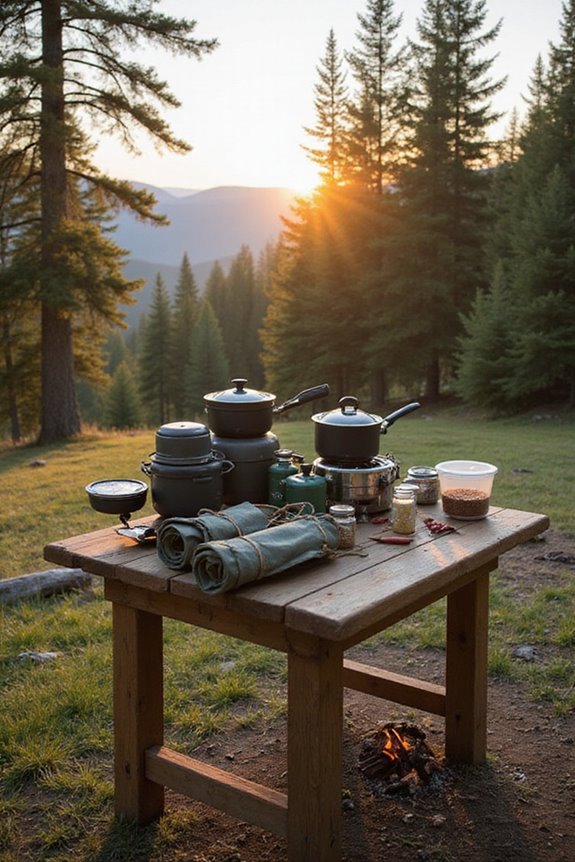
Camping gear organization can feel like a monumental task, especially when it comes to cooking gear and stoves, but with a little creativity and some handy strategies, it can be a breeze. First, group pots, pans, and lids together with their matching accessories to prevent scratches. Utensils like spatulas and knives deserve their own compartment, while spices should have a special bag. Utilizing plastic bins can keep everything organized and protected from the elements. For stove safety, store stoves in sturdy boxes, and keep fuel separate from food to avoid accidents. Labeling containers not only speeds up packing but also helps maintain sanity in the chaos of camping prep. With these tips, cooking gear storage becomes manageable—and maybe even fun!
Recommended Products

Lemubeane Tactical Camping Storage Bag 18L Utility Tote Bag Camp Kitchen and Trunk Organizer (Khaki)
One item includes a 18L camping storage bag, a shoulder strap, a US flag patch and a lemubeane logo hook. Made of 600D nylon, durable and water-resistant, these camping organizers are meant to last for years even for the most rugged users. Three colors to choose from: black, khaki & Army Green.

One item includes a 18L camping storage bag, a shoulder strap, a US flag patch and a lemubeane logo hook. Made of 600D nylon, durable and water-resistant, these camping organizers are meant to last for years even for the most rugged users. Three colors to choose from: black, khaki & Army Green.

Prime Quality: One item includes a tactical camping storage bag, a US flag patch and a shoulder strap. Made of 600D nylon and thickened PVC mesh, our bags are scratch resistant and moisture resistant. They are meant to last for years even for the most rugged users. Unlike ordinary products on the market, our storage bag is embedded with strong plates and EPE pad to maintain the hardcore framework and comfort at the same time. The main pocket is equipped with SBS zipper for smooth use.
Maintaining Coolers and Water Jugs
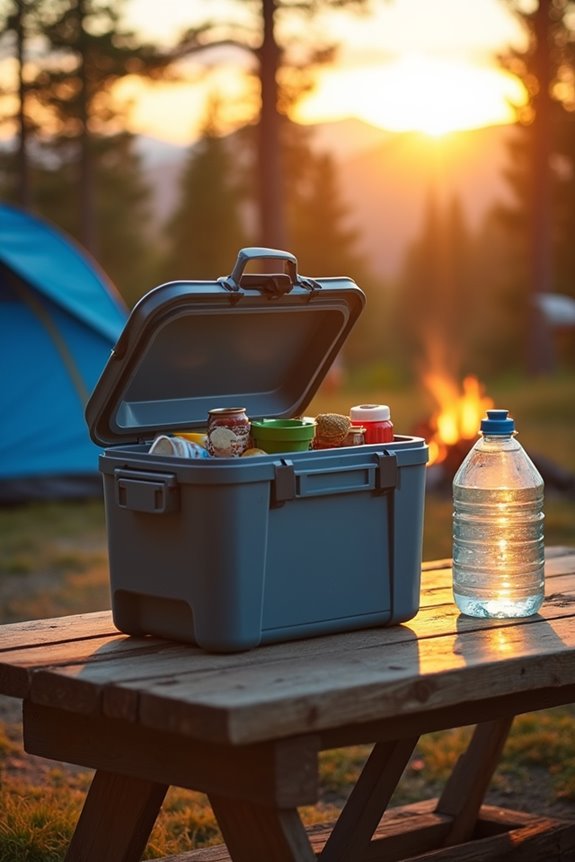
Maintaining coolers and water jugs is just as important as keeping cooking gear in order, especially when you’re out in the wild and every sip counts. For effective cooler cleaning, use a mild dish soap solution and a soft-bristle brush to scrub away grime. Rinse thoroughly—nobody wants soap-flavored water! For stubborn stains, a baking soda paste or a diluted bleach solution can work wonders. Water jug maintenance should involve scrubbing all surfaces after each use, ensuring you rinse away any soap. Once clean, let everything air dry with lids open; this helps prevent mold. Store your coolers in dark, cool places, and remember to keep lids ajar during storage. A little effort goes a long way in keeping your gear fresh for the next adventure!
Recommended Products

MULTIFUNCTIONAL CLEANING BRUSH: High-quality soft household cleaning brush bristles can easily clean dirty parts of clothes, such as collars and cuffs without damaging the fabrics, and can also be used to clean stains on tiles and countertops, making home cleaning easy.
🔹 Dual-Action Silver Polishing Cloths; Includes 1 black (pre-polish) & 1 grey (final shine) cloths to remove tarnish from silver jewellery, coins and cutlery without harsh chemicals.

MULTIFUNCTIONAL CLEANING BRUSH:Easily removes stains from clothing without causing damage; also suitable for cleaning countertops, sinks, bathroom crevices, and more, making cleaning tasks more efficient.
Using Storage Containers and Labels
Choose containers by the item: breathable bags for some fabrics, protective cases for fragile equipment, and ventilated bins when moisture could be trapped. Label by category and add a simple inventory or packing checklist. Do not assume an airtight container is better; if an item is not completely dry, sealing it can create the problem you are trying to prevent.
Recommended Products
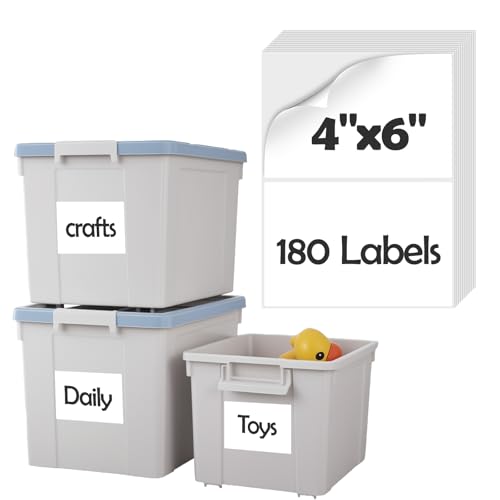
LARGE REMOVABLE LABELS –– 180 4"x6" White Matte Removable Labels provide ample space to write down the necessary information. 90 sheets, 2 labels per sheet

[Various color and size labels] ”The PreFeel kids label only Authorized PreFeel Store“.This kit has 2 sizes, 6 colors,total 310pcs labels with a black marker pen to meet your different demands. It also comes with a reusable zipper bag for easy storage

Durable labels resist moisture, scuffing, tearing and smudging,great for bin labels, jars, plastic containers, name labels for kids school supplies and more
Avoiding Damp and Humid Environments
Keep gear away from leaks, condensation, damp basements, and unventilated corners. If the storage space is humid, improve airflow or use a suitable moisture-management solution without placing loose chemicals against fabric or food-contact items. Check for musty odor, mildew, corrosion, swelling, or coating changes and address the cause before storing gear again.
Creating an Efficient Packing System
Group gear by function—shelter, sleep, cooking, clothing, navigation, first aid, and repair—and keep the items that travel together in the same labeled area. Record model-specific parts, batteries, fuel, and expiry or replacement notes. Keep critical items easy to reach, and refresh the checklist after each trip so the system reflects what you actually use.
Regular Inspection and Maintenance
Inspect gear before and after trips, with extra attention after wet, sandy, cold, or demanding use. Check fabric, seams, zippers, poles, buckles, coatings, batteries, fuel systems, cookware, and water containers. Clean by the care label, dry fully, and repair small issues before they become failures. Replace anything that can no longer perform a safety-critical function.
Frequently Asked Questions
When should I inspect camping gear?
Inspect it before and after each trip, after unusually wet or dirty use, and whenever storage conditions change. Safety-critical items deserve a closer check before every use. The right interval depends on the item, use, material, and manufacturer’s guidance.
Can I store camping gear in a shed?
Possibly, if the shed is secure, dry, ventilated, and suitable for the gear. Protect fabric and electronics from heat, condensation, pests, and direct sunlight, and follow local rules for fuel or gas canisters. Do not store damp gear in a closed shed.
How should I clean a sleeping bag?
Follow the bag’s care label and insulation type. Spot-clean when practical, use the recommended cleaner, avoid harsh chemicals and unnecessary heat, and dry completely before storage. Large or delicate bags may need a suitable commercial cleaner.
Should I store a tent packed or unpacked?
Clean and dry it first, then follow the manufacturer’s storage guidance. Many tents benefit from loose storage rather than long-term compression, but the important points are preventing trapped moisture, protecting poles, and avoiding unnecessary strain on fabric and coatings.
How can I prevent insects in stored gear?
Remove food, oils, and organic debris, clean containers, seal appropriate items, and inspect the storage area for entry points or moisture. Avoid spraying insecticide directly on technical fabric, cookware, or sleeping gear unless the product instructions specifically allow it.