As an Amazon Associate, we earn from qualifying purchases. Some links on this site are affiliate links at no extra cost to you. Our recommendations are based on thorough research and editorial judgment.

How to Choose a Travel Wallet

Choose a travel wallet by starting with what you actually carry: passport or ID, cards, cash, tickets, receipts, keys, and any travel documents. Then compare access, organization, security features, material, moisture handling, comfort, and return or warranty support. The best wallet keeps essentials easy to reach without becoming so bulky that you leave it exposed or stop using it.
Key Takeaways
- List the documents and payment methods the wallet must hold without overfilling.
- Compare leather, textile, synthetic, and recycled materials by care and intended use.
- Treat RFID blocking as one security feature, not a substitute for theft awareness.
- Check compartment layout, closure, access, dimensions, and comfort with your usual load.
- Verify moisture guidance, returns, warranty terms, and replacement support before buying.
Material and Durability Considerations
You may be interested



Material affects feel, care, abrasion resistance, moisture handling, and appearance. Leather may need specific cleaning and conditioning; synthetic or textile options may be easier to wipe clean and can reduce weight, depending on construction. Inspect stitching, edge finishing, lining, zipper or snap quality, and stress points around card slots. No material is automatically waterproof, so follow the maker’s care instructions and use a separate document pouch when exposure is likely.
RFID Protection and Security Features
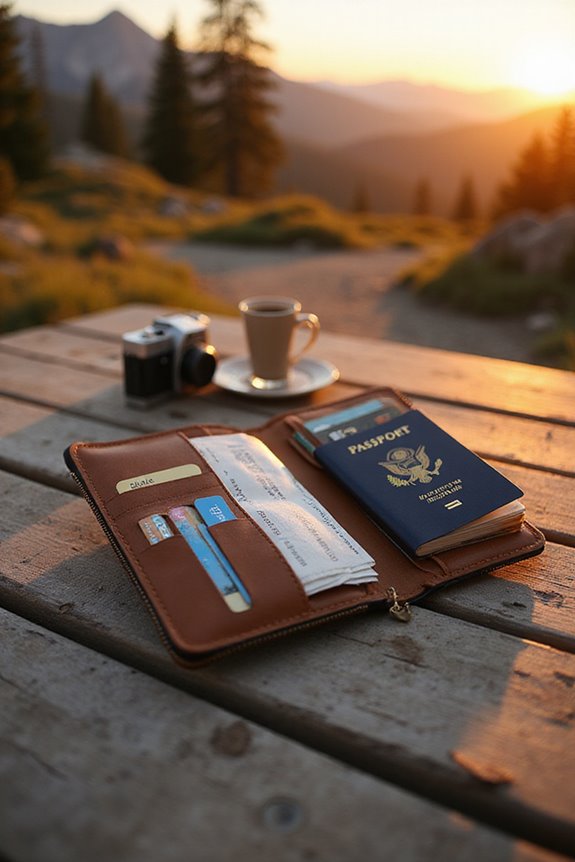
RFID-blocking construction may reduce some contactless scans, but it does not prevent every form of theft, card misuse, or loss. Check the product’s actual protection claim and whether it covers the compartments you plan to use. Pair it with practical habits: keep the wallet closed, avoid displaying documents in crowded places, carry only what you need, and use bank or travel alerts where available. A secure closure and discreet design can be as important as the RFID feature.
Capacity and Organizational Features
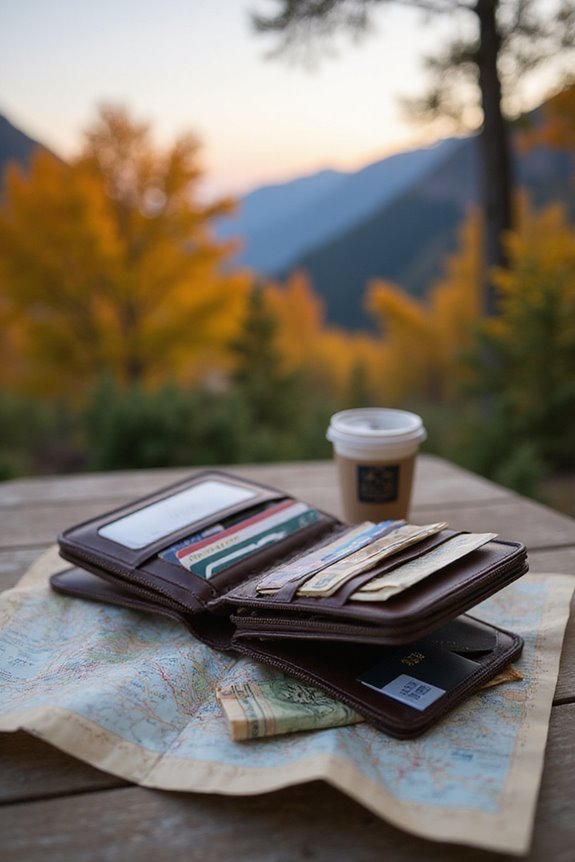
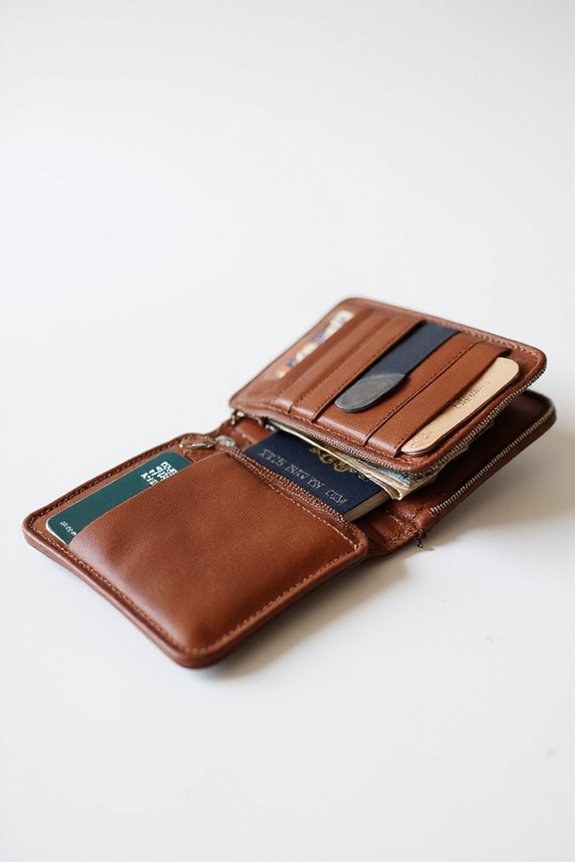
A well-organized travel wallet is like having a trusty sidekick on every adventure, making it easier to navigate through bustling airports or crowded train stations. With various compartment types, it enhances organizational efficiency, allowing travelers to store passports, currencies, and tickets separately. Quick-access slots for transit cards guarantee smooth shifts, while dedicated compartments keep boarding passes neat and tidy, reducing chaos. The ability to carry multiple cards without overcrowding is a game-changer, and transparent ID windows make identification a breeze. Additionally, zippered coin pockets and small item slots for keys or SIM cards keep loose items secure. With thoughtful features like pen loops and key leashes, these wallets guarantee everything stays in its place, making travel stress-free and enjoyable.
Size, Weight, and Portability
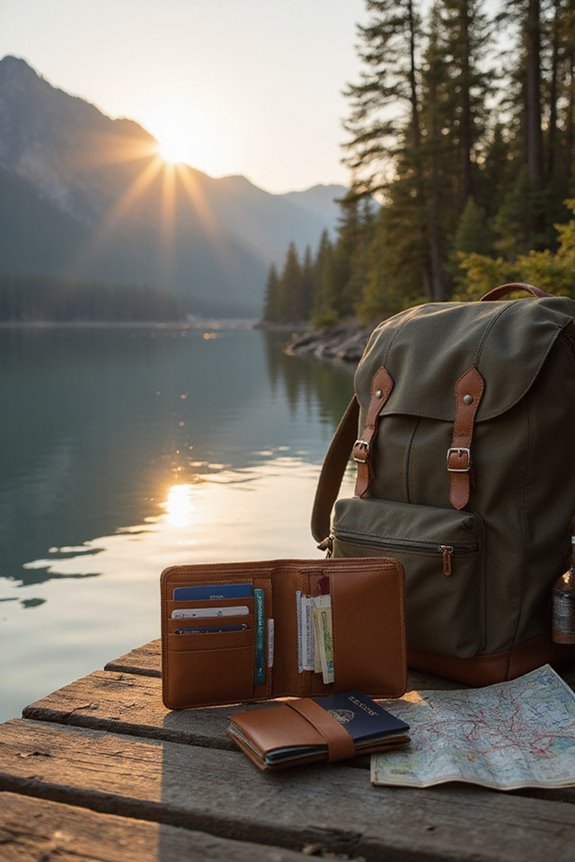
Measure the wallet against the pocket, bag, or travel organizer where you will actually carry it. Compare its closed dimensions and weight with the items inside, not with an empty product alone. A slim wallet is useful only if it still protects documents and keeps cards accessible. Test sitting, walking, and reaching for it; a wallet that shifts, bulges, or is uncomfortable may encourage unsafe storage.
Budget, Warranty, and Brand Considerations
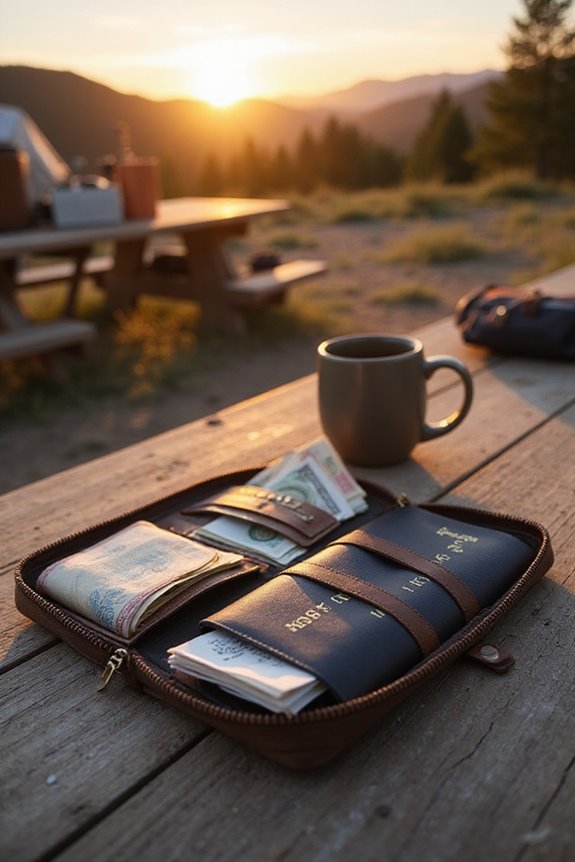
Compare the total value rather than choosing by price alone. Check materials, construction, included features, returns, warranty exclusions, repair or replacement options, and the seller’s delivery policy. Read recent reviews for repeated issues such as broken closures, peeling surfaces, or tight card slots. A familiar brand is not automatically better, and a lesser-known brand is not automatically worse; verify the specific model and seller.
Recommended Products

Compact & Lightweight: Measuring 4.2" x 3.6" x 0.75", this slim wallet fits easily into your pocket or handbag, making it perfect for daily use or travel.

FUNCTIONALITY: Our RFID wallet not only offers security, it's also very functional. It features 6 card slots for you to place your most frequently used cards
Frequently Asked Questions
What color is best for a travel wallet?
Choose a color that is easy for you to identify but not conspicuous in crowded places. The practical priorities are secure storage, clear organization, comfortable carrying, and a finish that suits your travel conditions.
Are travel wallets waterproof or water-resistant?
Some are water-resistant, but the claim depends on material, seams, lining, and closure. Check the product’s exact guidance; do not assume that a coated surface or water-resistant label makes the wallet safe for immersion. Use a separate waterproof pouch for critical documents in wet conditions.
Can I use a travel wallet every day?
Yes, if its size, access, and capacity suit your routine. Remove travel-only documents when you return home, and avoid carrying a full passport wallet when a smaller daily wallet would be safer and more comfortable.
How should I clean and maintain a travel wallet?
Follow the manufacturer’s care instructions, empty the wallet first, and test any cleaner on a hidden area. Keep it dry, avoid overfilling, and inspect stitching, closures, and lining before a trip. Leather and coated or technical textiles may require different care.
Are there travel wallets designed for different users?
Products may differ in size, color, access, strap options, and organization, but those features are not limited to one gender. Choose based on your documents, clothing, carrying method, accessibility needs, and comfort.