As an Amazon Associate, we earn from qualifying purchases. Some links on this site are affiliate links at no extra cost to you. Our recommendations are based on thorough research and editorial judgment.

How to Charge Devices While Camping

Charging devices while camping starts with the trip’s power needs, weather, access to a vehicle or outlet, and how critical each device is. Power banks, solar panels, car charging, hand-crank radios, portable power stations, and heat-based chargers each have limits. Estimate consumption, bring compatible cables and adapters, protect batteries from heat and moisture, and keep a non-powered backup for navigation and emergencies.
Key Takeaways
- Match the power system to the devices, trip length, weather, and access to a vehicle or outlet.
- Check output, input, connector, battery, and charging standards for every device before departure.
- Solar charging depends on usable sunlight and panel placement; it is not a guaranteed replacement for stored power.
- Use car chargers carefully to avoid draining the starter battery, and never run combustion equipment in an enclosed space.
- Keep cables, batteries, and chargers dry, cool, protected, inspected, and separate from flammable materials.
Portable Power Banks: A Convenient Solution
You may be interested



Power banks are convenient for phones, GPS units, cameras, and other small devices. Compare usable capacity, output ports, charging standards, recharge time, size, weight, temperature limits, and ingress protection. Real-world capacity is lower than a headline rating and changes with cable, device, temperature, and conversion losses, so leave a practical reserve. Do not use a swollen, cracked, leaking, or overheated battery.
Recommended Products

【20000mAh Fast-Charging Power Bank】ASWAYKE 20,000mAh Rugged Power Bank, a reliable battery pack, delivers 5 full charges for iPhone or other small devices effortlessly. Equipped with Fast Charging USB-C PD technology and dual Type-C/Type-A ports, it supports simultaneous power output—charge your phone while topping up a tablet, eliminating low-battery anxiety during hiking, camping.
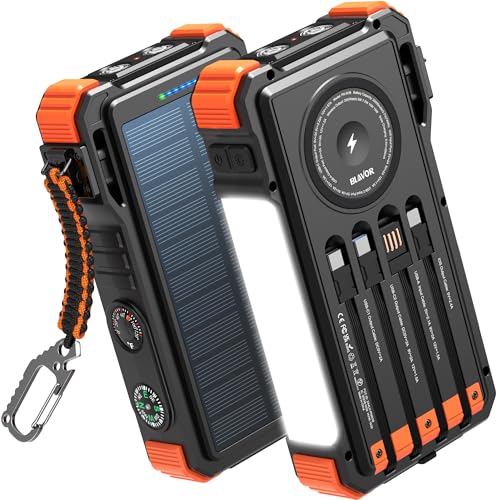
Simultaneously Charge 6 Devices: The BLAVOR solar charger is your ultimate charging solution! With its 4 built-in cables (including 2 USB-C, 1 iOS, and 1 USB-A) and 3 charging ports (USB-C, USB-A, and iOS), you can power up to 6 devices all at once. It even has a special wireless charging area for your phones and Apple Watch, making it a true multitasking marvel

To activate C300 DC Portable Power Station for the first time: Recharge with an 18W or higher USB-C wall charger, such as an Anker USB-C charger or laptop charger. Note that only the USB-C2 and USB-C3 ports can be used.
Harnessing the Sun With Solar Chargers
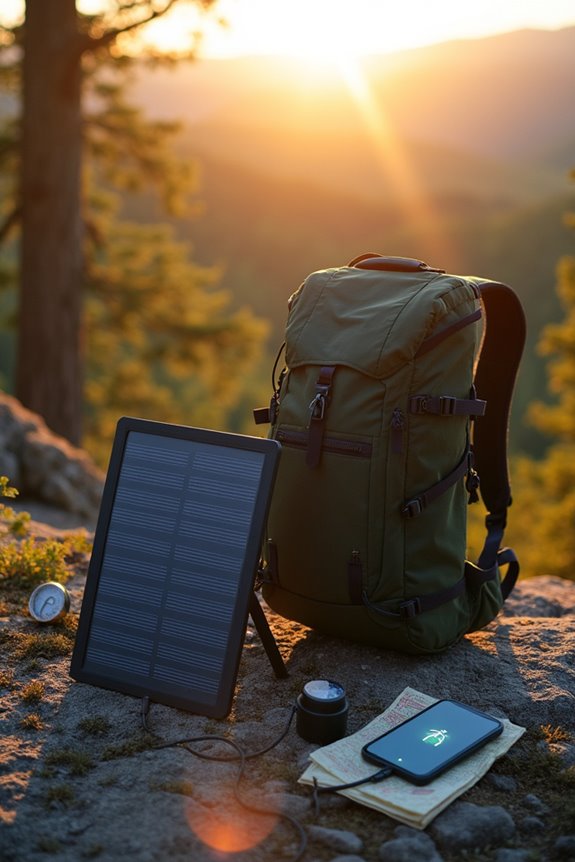
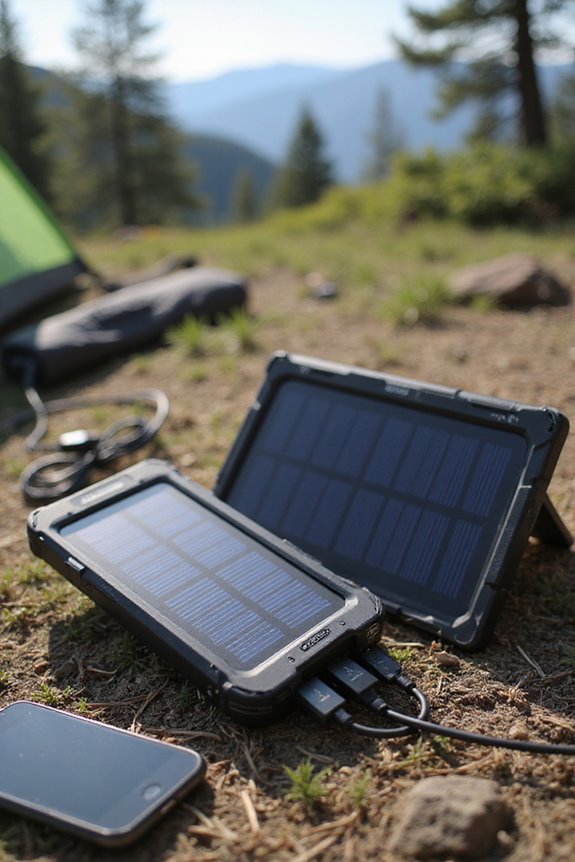
Solar panels work best when placed in usable sunlight and oriented according to the manufacturer’s guidance. Shade, clouds, low sun, movement, dust, heat, and poor cable connections can reduce output. A panel may charge a power bank more predictably than a device that needs steady power, so use stored energy when conditions change. Keep panels and connectors dry and do not assume a weather-resistant claim allows immersion.
Recommended Products

Advanced Performance: BigBlue 28W portable solar charger provides 20% more power from every ray, thanks to shadow-free surface design (No metal lines on the front panel). Engineered heat resistance and advanced N-type solar cells offer superior Low-Light efficiency and extending operational longevity

Upgraded High-Efficiency 4 Solar Panels: Equipped with 4 premium solar panels, this solar panel charger charges up to 5 times faster than standard single-panel chargers. It enables direct solar charging even in outdoor settings—keeping your devices powered with green energy anytime, anywhere.

【49800mAh High-Capacity Backup Power】** Keep your essential devices powered with a 49800mAh battery designed for extended backup use. Provides dependable power for compatible phones, tablets, earbuds, GPS devices, cameras and other USB-powered electronics during travel, camping and emergencies.
Manual Power: The Role of Hand Crank Chargers
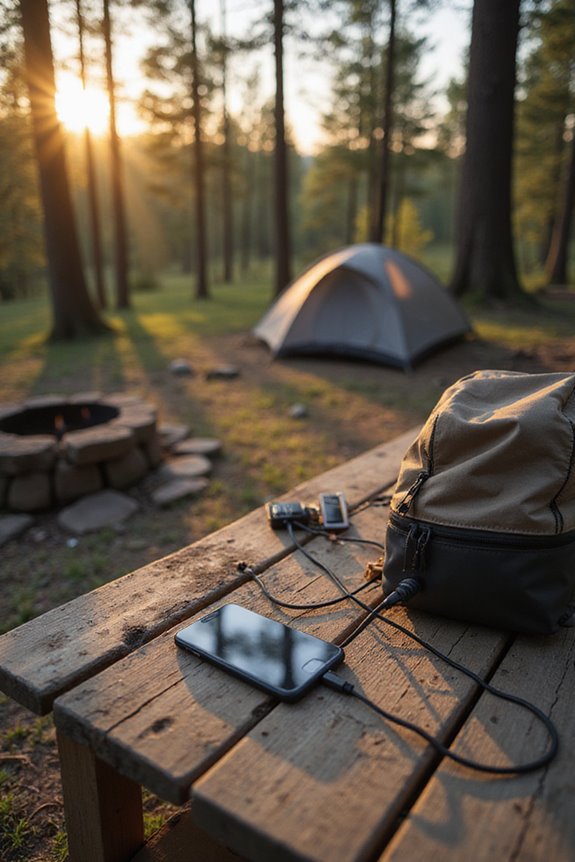
Hand-crank chargers are best treated as an emergency backup for small amounts of power, a radio, or a light. Output depends on the device, crank, battery condition, and sustained effort, so test the exact unit before relying on it. Choose a model with clear instructions, protect the mechanism from grit and water, and do not expect it to replace a charged power bank for high-demand equipment.
Recommended Products

【Reliable 𝗡𝗢𝗔𝗔/𝗔𝗠/𝗙𝗠 Reception with Clear Sound】With a high-sensitivity signal chip, noise-reduction circuitry, and an extended antenna, the radio ensures 𝗳𝗮𝘀𝘁, 𝘀𝘁𝗮𝗯𝗹𝗲 𝗿𝗲𝗰𝗲𝗽𝘁𝗶𝗼𝗻 across NOAA FM AM bands. Whether you're sheltering during a storm or camping off the grid, you'll hear every update loud and clear.

【 Super Bright 3 LED Flashlight 】 The flashlight on this emergency hand crank radio has been upgraded from a 1W single bead to a 3W 3 LED bead that provides 140LM of brightness, enough to provide you with emergency lighting in the event of a power outage.

AUTOMATIC NOAA WEATHER ALERT RADIO - This weather alert radio may save your life! Especially important at night while you are sleeping! It auto-scans for emergency and weather alerts when you turn the device on or in standby mode,and alert you if any emergency warning is issued. No need to listen to the weather broadcast all day and night. Getting an NOAA alert about impending weather threats gives you a heads-up that bad weather is on the way, so you can prepare or even evacuate if necessary.
Utilizing Car Power Chargers for Camping
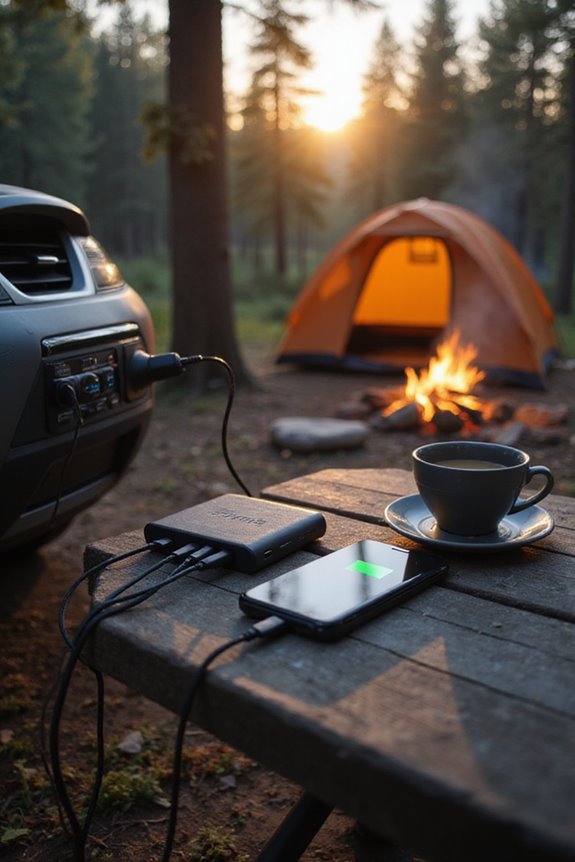
Vehicle USB chargers and approved power inverters can help when camping near a car, but confirm the vehicle’s outlet limits and the charger’s compatibility. Avoid draining the starter battery, monitor heat, and disconnect when the vehicle is unattended unless the system is designed for that use. Never run the engine, fuel generator, or combustion appliance inside a tent, vehicle, shelter, or other enclosed area because of carbon-monoxide risk.
Recommended Products

〖Car power inverter〗This Car power converter is equipped with 2 U.S. standard AC outlets, 4 USB charging ports, DC 12V to AC 110V converter,perfect for charging electronic devices such as laptops, tablets, cell phones, Christmas gifts, light strings and so on.

Dust/Water Resistant Charging Brick: Our portable power bank is rated IP67 for dust and water resistance when port cover is securely closed
Innovative Wood Stove Charging Options
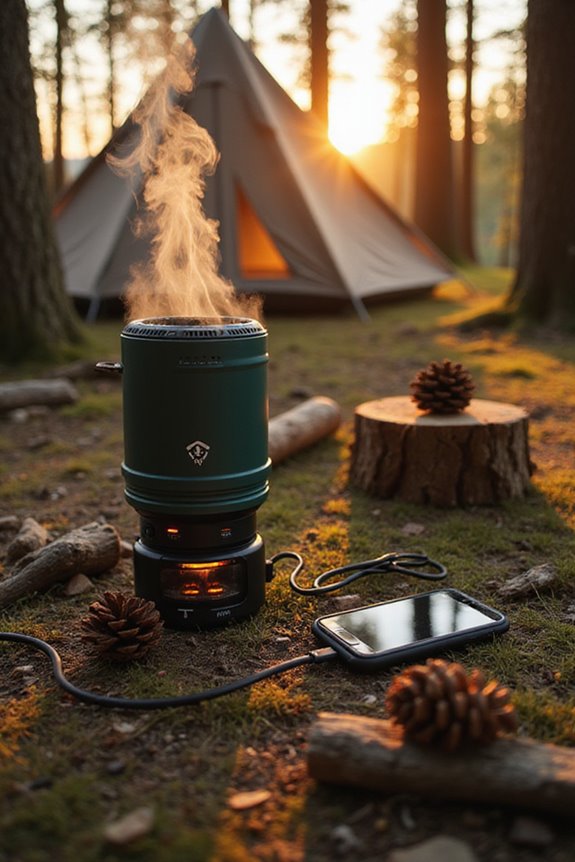
Heat-based stove chargers can produce limited power while a compatible stove is operating, but they add fire, burn, smoke, and fuel-management considerations. Use only the manufacturer’s approved setup, keep the stove stable and supervised, maintain ventilation, follow fire restrictions, and protect cables from hot surfaces. Treat the charger as a supplement and keep ordinary battery power available.
Cable and Connector Management for Efficiency
Pack the cables and adapters each device actually needs, label them, and keep them in a dry pouch. Protect connectors from grit, sharp bends, crushing, and heat, and inspect for damaged insulation or loose plugs. Route cables away from walkways, flames, moving parts, and rain. Test the complete charging chain at home so a missing adapter does not appear at camp.
Choosing the Right Power Bank Capacity
Estimate each device’s battery size, expected use, recharge loss, and the number of days before a reliable power source. Add a reserve for cold, navigation, photos, emergency communication, and an aging battery, then choose a capacity that you can carry and recharge. Check the power bank’s output and connector standards; capacity alone does not prove that it can charge a particular device.
Recommended Products
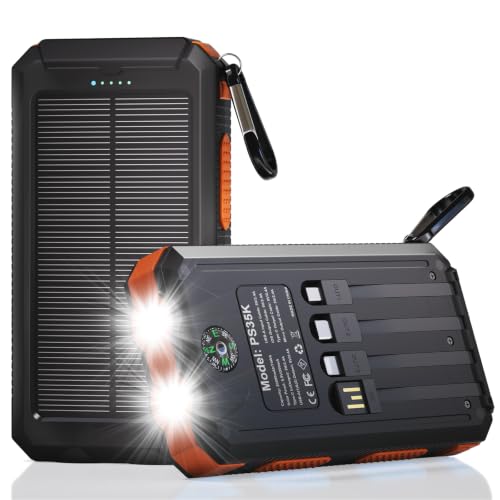
High-Quality Portable Solar Charger - water-resistant, shock-resistant and dustproof solar phone charger, featured with carabiner, compass, and 2LED flashlight. Solar power bank provides more convenience in your daily or on your trip. Awesome for outside activities such as camping, hiking, and other emergency use. The solar USB battery pack can be regards as a nice gift.

Simultaneously Charge 6 Devices: The BLAVOR solar charger is your ultimate charging solution! With its 4 built-in cables (including 2 USB-C, 1 iOS, and 1 USB-A) and 3 charging ports (USB-C, USB-A, and iOS), you can power up to 6 devices all at once. It even has a special wireless charging area for your phones and Apple Watch, making it a true multitasking marvel
Benefits of Fast Charging Technology
Fast charging can reduce time connected to a power source, but the device, cable, charger, temperature, and battery state all limit the result. Use compatible, certified equipment and follow the device maker’s guidance. Faster is not always better in heat or when battery longevity matters, so choose a stable setup over a headline speed.
Combining Solar and Battery Power
A solar panel paired with a power bank or portable station can store energy for cloudy periods, shade, and nighttime use. Match panel output to the station’s input range, keep connections secure, and place the panel where it receives useful light without creating a trip or fire hazard. Track what the devices consume and prioritize navigation, communication, and safety over entertainment.
Tips for Maintaining Charging Equipment
Store batteries and chargers in a cool, dry, ventilated place away from direct sun, water, fuel, and flames. Follow the manufacturer’s storage and charging guidance, inspect ports, cables, housings, and seals, and update connected equipment before leaving reliable internet. Stop using any battery that swells, leaks, smells unusual, becomes excessively hot, or shows visible damage.
Frequently Asked Questions
How Long Does It Take to Charge Devices Using a Power Bank?
Charging time depends on the device’s battery, the power bank’s usable capacity and output, the cable, temperature, and whether the device is being used. Check the manufacturer’s input and output specifications, allow for conversion loss, and test the setup before the trip. A higher-capacity bank may take longer to recharge.
Can I Charge Multiple Devices Simultaneously With a Solar Charger?
Some solar chargers have multiple ports, but sharing output can slow charging and unstable sunlight can interrupt it. Check the panel’s total output and each port’s limit, then test the exact devices together. In changing weather, charge a power bank first and use it to provide steadier output later.
What Devices Can Be Charged With a Hand Crank Charger?
Many hand-crank units are intended for small electronics, lights, or radios, but capability varies. Read the exact model’s output and connector information, test it before departure, and treat it as an emergency top-up rather than a dependable full recharge for a large battery.
Are There Eco-Friendly Charging Options for Camping?
Solar panels, rechargeable batteries, and efficient devices can reduce the need for disposable batteries or fuel, but their impact depends on manufacturing, transport, lifespan, repair, and disposal. Choose a system sized to real needs, use it for many trips, maintain it, and recycle batteries through an approved program.
How Do I Ensure My Charging Equipment Stays Dry During Rain?
Keep chargers and batteries under a dry, ventilated shelter, use compatible protective cases or bags, and keep connectors covered when not in use. Do not charge wet equipment or seal a warm battery in an airtight bag where condensation can build. Follow the product’s ingress and charging instructions, and move the setup if rain or condensation makes it unsafe.