As an Amazon Associate, we earn from qualifying purchases. Some links on this site are affiliate links at no extra cost to you. Our recommendations are based on thorough research and editorial judgment.

Hard-Shell vs Soft-Shell Luggage: Which Is Better?

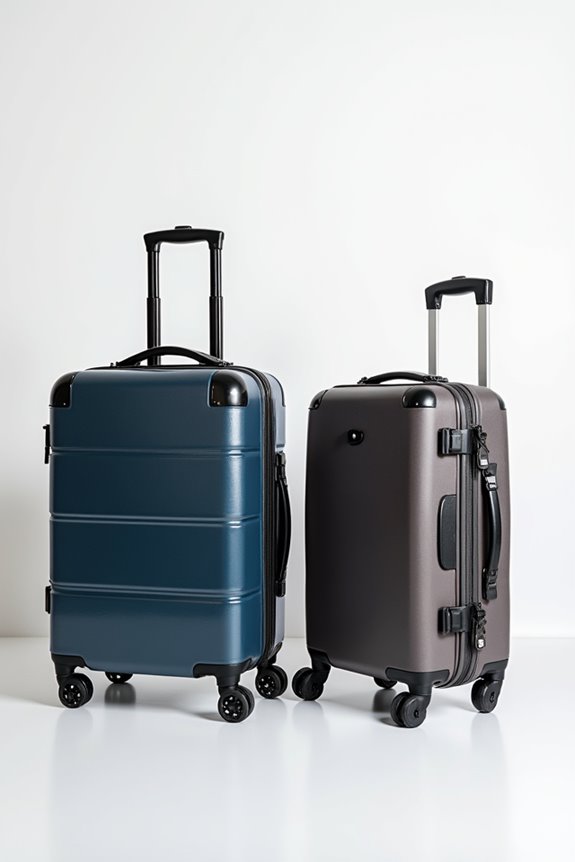
Hard-shell and soft-shell luggage solve different travel problems. Hard cases provide a rigid exterior and can help protect some contents from compression, while soft cases often offer flexible capacity, exterior access, and easier handling in tight spaces. Compare the actual construction, weight, wheels, zippers, compartments, weather protection, repair support, and airline limits before choosing.
Key Takeaways
- Choose hard-shell luggage for rigid structure when that matters, but do not assume every hard case protects every fragile item.
- Choose soft-shell luggage for flexible packing, exterior pockets, and easier access when those features fit your trip.
- Compare empty weight, dimensions, wheels, handles, zippers, expansion, and airline restrictions.
- Weather resistance depends on seams, closures, materials, and covers—not only the shell type.
- Consider repairability, warranty, cleaning, storage, and how the case will actually be handled.
Weight and Portability
You may be interested



Compare the empty weight, packed dimensions, wheel design, handle feel, and how easily the case fits your normal transport. Soft-sided luggage may flex into tight spaces and provide outside access, while a hard case may roll or stack differently depending on its shape and frame. Check the airline’s current size and weight rules rather than relying on a general assumption about either style.
Protection and Durability

A hard shell can resist some compression and surface moisture, but protection depends on the material, frame, corners, closures, interior padding, and how the case is packed. A soft shell may absorb some minor contact and can be easier to repair, but fabric panels and zippers need care around abrasion and rain. Use protective packing for fragile items and treat both types as transport containers, not impact-proof boxes.
Storage Capacity and Flexibility

Soft-sided cases often provide expansion and exterior pockets, which can help with access and irregularly shaped items. Hard-sided cases usually hold a more defined shape and may split packing between two compartments. Compare usable interior space after wheels, handles, dividers, and padding take up room. Expansion can also increase dimensions beyond an airline limit, so check before opening it.
Ease of Handling and Traveling

Handling depends more on the wheel layout, wheel quality, handle stability, case dimensions, and packed weight than on the shell label alone. Test the case over the surfaces you expect—airport floors, pavement, stairs, trains, or uneven paths. Check whether the handle height suits you and whether exterior pockets can be opened without placing the bag in an awkward position.
Suitability for Travel Types
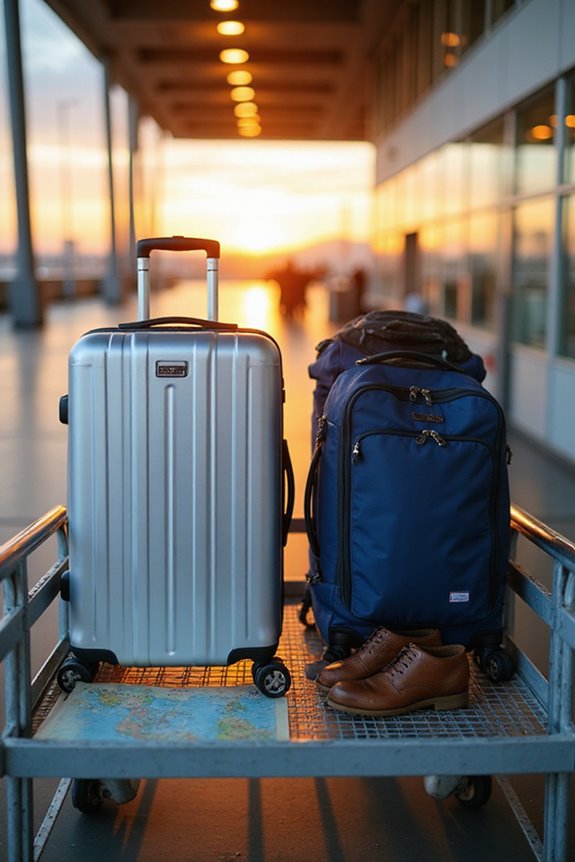
Soft-shell luggage can suit trips where flexible capacity and quick access are useful, while hard-shell luggage can suit travelers who prefer a rigid case and wipe-clean surfaces. Neither is automatically better for family, business, or adventure travel. Match the case to transport, weather, storage, fragile contents, weight limits, and how often you will carry it.
Recommended Products
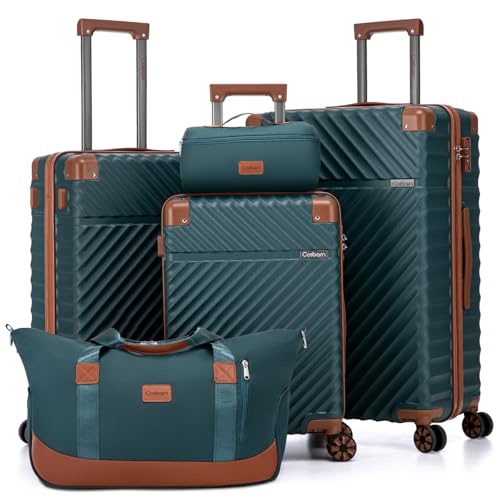
【5 PIECE LUGGAGE SET】 This 5-piece suitcase set includes three suitcases with wheels: a 20” carry on luggage for quick getaways, a 24” medium suitcase for week-long trips, and a 28” large suitcase for check in luggage. A matching tote (with trolley sleeve, detachable strap) and toiletry bag complete this travel luggage set. The tote slides over your rolling luggage handle, and the strap clips to D-rings for crossbody carry. The three hardshell suitcases nest inside each other for compact storage

EFFICIENT DESIGN: Medium size Best for 1-2 week trips; measures 17.8 x 11.3 x 26.8 inches, including wheels
Frequently Asked Questions
Which Type of Luggage Is More Affordable?
Price varies by materials, wheels, construction, brand, warranty, and features, so neither shell type is always cheaper. Compare similar sizes and components, include likely repair or replacement costs, and check current prices and return terms. A lower purchase price may not be better value if the case does not suit the trip.
Can Hard-Shell Luggage Be Repaired if Damaged?
Some hard-shell damage can be repaired or parts can be replaced, but cracked shells, broken frames, damaged wheels, and failed closures may require manufacturer or specialist support. Check the warranty and spare-parts policy, stop using a case that no longer closes or rolls safely, and do not rely on a cosmetic patch for structural damage.
Are Soft-Shell Bags More Stylish Than Hard-Shell?
Style is personal. Soft-shell and hard-shell cases come in different colors, textures, shapes, and finishes, so choose the appearance and layout you will enjoy using. Prioritize fit, handling, construction, and repair support before treating a visual preference as a performance difference.
How Do I Clean Hard-Shell and Soft-Shell Luggage?
Empty the case, follow the care instructions, and remove dirt before it works into seams or wheels. Hard shells can usually be wiped with a compatible mild cleaner; soft shells may need brushing, spot cleaning, or a removable-liner wash. Dry all materials fully, avoid harsh solvents, and inspect zippers, wheels, handles, and seams before storage.
Is One Type More Environmentally Friendly Than the Other?
There is no simple environmental winner. Consider how long the case is likely to last, whether parts can be repaired, how it will be cleaned, the materials used, shipping, and what happens at end of life. Look for specific, current material or recycled-content information rather than relying on broad sustainability language, and choose a case you can use for many trips.